18+. Full T&C's apply. Sports bonus: 100% match up to $500. Casino bonus: 100% match up to $500. Enter promo code NEW200 at deposit and get up to a $1000 bonus. Valid on your first three (3) deposits. Available for all deposit methods. Minimum deposit of $50.
18+. Full terms apply. The Bet Back Bonus is available for new customers on first-time deposits of $50 or more. To redeem, select the offer in the cashier while completing your first deposit. Make your pick(s) in the Sportsbook and then select ‘Opt In to Use Your Bonus’. A Bet Back Bonus pop-up will display, select ‘Claim’ and then enter the risk amount to place your bet. If it wins, you keep your profits. If it loses, get 100% of your risk refunded as Free Play with only 1-time rollover. Free Play can then be used to place bets in the Sportsbook and earn cash. Additional T&Cs apply, please visit MyBookie to access the Help Center or contact Live Chat for more details.
18+. Full T&C's apply. This promotion is available only to new accounts in North America. Freeplay amount must be wagered five times (5x rollover) before it becomes eligible for withdrawal. Only prematch (sportsbook) bets count toward the 5x rollover requirement. Each person may claim only one bonus. If a customer creates multiple accounts to exploit this promotion, bet105 will mark all related accounts as ineligible and reclaim the funds. If a client receives more than two free bets without making a deposit, any winnings from those bets will be forfeited. This promotion applies only to the initial deposit or if specifically assigned by bet105.
18+. Full terms apply. New BUSR members only. Minimum deposit of $50 required per qualifying deposits. Codes 300SB1, 300SB2, and 300SB3 must be entered at the time of each corresponding deposit.
Each code is valid one time only. Each bonus code must be claimed at least 24 hours apart. Only one promo code may be applied per deposit. A 20x rollover requirement applies to the combined total of your initial deposit and bonus before any withdrawal can be made. Redeemable in the Sportsbook only. BUSR management reserves the right to modify, suspend, or cancel this promotion at any time. Redeem each promo code in the cashier to get your bonus. Must be 18 or older. Please gamble responsibly. General House Rules Apply.
18+. Full terms apply. 100% up to $500 Bonus. Valid for non-crypto payment methods only. Minimum deposit amount $50. This offer is not available to customers from Canada or Mexico. The bonus code must be redeemed immediately after the deposit and before a wager has been placed. The sum of the deposit and the bonus are subject to rollover requirements of 12x at min. odds of -200 (1.5) before a new code can be redeemed. Max. $500 of each bet count towards the rollover requirements. Only bets placed on options that take place count towards the rollover requirements. Wagers on Horse Racing and Boosted Odds do not count towards the rollover requirements. All general Everygame Sportsbook rules apply.
21+. Full T&C's apply. Bonus: 35% of qualifying deposit, up to $105. Rollover: 8× (only sports action counts towards the rollover) deposit + bonus. Expiry: 7 days after credit. Hold period: 2 weeks. Payouts allowed only after rollover and hold period are completed. Example: Deposit $200 → Receive $50 Sports Free Play. Sports Free Play Rules: see the BetAnything General Reward Rules for eligible sports, wager types, odds, and rollover rules.
18+. Full T&C's apply. This bonus can only be redeemed on your first deposit. Rollover is 5x Sports/5x Horses/30x Casino on both the initial deposit and the bonus amount. Rollover in our Sportsbook, for winning wagers, will be determined by the lesser of your risk or win amount at the time of wager settlement; for losing wagers your risk amount will be credited to your rollover contribution. Bonus funds cannot be used for play on Live Dealer games. Live Dealer play does not count toward meeting Casino rollover requirements for withdrawal. If a withdrawal is made before the bonus terms are met, all bonus funds as well as any money earned by wagering the bonus will be forfeited.
The hard question often comes after the bet is placed.
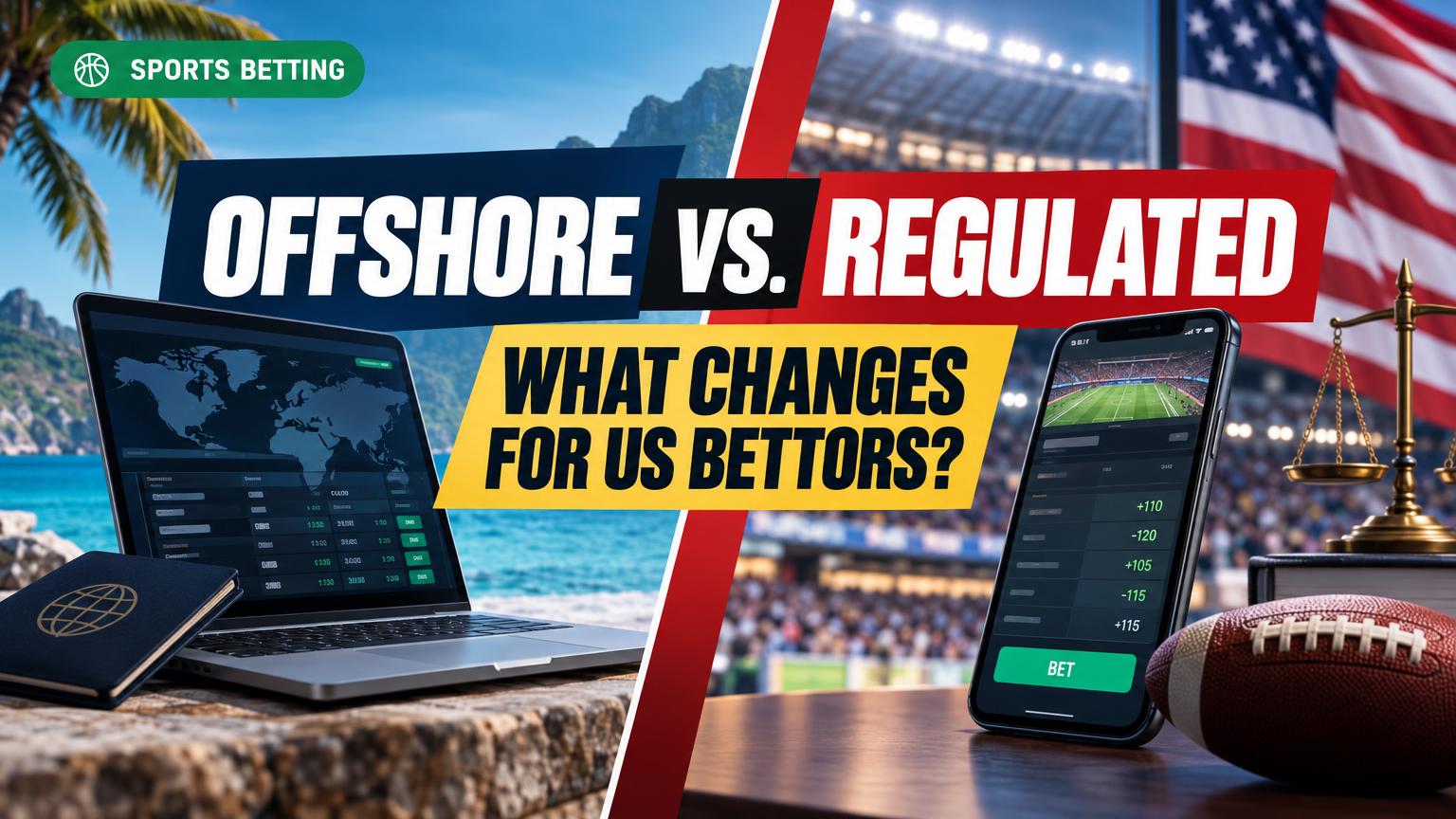
A bettor in a state without legal online sportsbooks may still be able to open an offshore site and find markets unavailable on nearby apps. That access does not mean the site is state-approved—or that a disputed withdrawal will be handled the same way.
State-licensed books operate under local rules for account controls, bet settlement, and complaints. Bettors can generally escalate unresolved issues to a state regulator. Offshore operators may provide responsive support and publish clear house rules, but disputes typically remain with the operator or its overseas licensing authority. The practical difference is who can intervene if a payout stalls, a bet is graded unexpectedly, or an account is restricted.
Key terms
What “licensed” means depends on location
State-licensed sportsbook
An operator authorized to take bets under a particular US state’s rules. That approval does not extend to every state, and a bettor typically must be physically located in an approved state when placing a wager.
Offshore sportsbook
An operator serving US bettors outside the state-regulated sportsbook system, often under a license issued abroad. “Offshore” does not necessarily mean unlicensed; it describes a different regulatory relationship with the bettor.
Foreign license
A license from another country may impose rules on an operator, but it does not by itself authorize bets from someone in a given US state. The scope of that license matters more than the mere presence of a license number.
Accepted registration
An offshore site may allow a US resident to open an account. That technical acceptance is not a determination that the operator is authorized to serve the bettor where a wager is placed.
Bettor’s jurisdiction
Applicable rules can depend on physical location, age, and the type of wager. Availability on a website is therefore not a reliable substitute for checking the rules where the bettor is located.
How the differences show up at a sportsbook
The distinction is not simply which site offers more markets or a larger welcome offer. State rules set a baseline for regulated sportsbooks; individual operators still choose many of the features bettors see. Offshore sites also vary by operator and licensing jurisdiction. The table separates those requirements from details worth checking before signing up.
Feature
State-regulated US sportsbook
Offshore sportsbook
Check the operator’s terms
Licensing
Authorized by the relevant state regulator.
May hold a foreign license, which does not establish state authorization.
Named license holder and regulator.
Location checks
Must confirm the bettor is in a state where it operates when placing bets.
May restrict locations; access does not establish local legality.
Residency rules and any location blocks.
Markets
State rules can limit eligible events and bet types.
Offerings depend on site rules and applicable restrictions.
Available leagues, limits, and grading rules.
Payments
Must follow state rules; supported methods vary.
Methods and withdrawal procedures vary.
Fees, identity checks, withdrawal limits, and processing terms.
Promotions
Subject to state requirements; offers differ by site.
Governed by site terms and any applicable licensing rules.
Rollover, eligible bets, expiry, and withdrawal conditions.
Complaints
State regulator provides an escalation route.
Routes depend on the operator and licensing jurisdiction.
Dispute process and regulator contact details.
Tax records
Operators may issue forms when reporting thresholds apply.
US tax forms may not be provided.
Account history and downloadable transaction records.
A missing form does not remove a US bettor’s tax obligations. Keeping independent records can make it easier to reconcile deposits, withdrawals, and bets on either type of site.
What happens when a bet is disputed
A disputed bet often comes down to a specific rule: whether a player had to start, when a market closed, or how a postponed game is settled. At a state-licensed sportsbook, published house rules give the bettor and operator a common reference point. The bet slip, transaction history, and relevant rule can help establish what happened, even when they do not support the bettor’s preferred outcome.
Customer support is usually the first stop. If the issue remains unresolved, a bettor can generally file a complaint with the state regulator that oversees the sportsbook. The regulator may review whether the operator followed its rules and applicable requirements. That is meaningful recourse, but it does not guarantee a refund, a faster withdrawal, or a ruling in the bettor’s favor.
Offshore sportsbooks may also publish rules and offer support or an internal escalation process. Any outside complaint option depends on the operator’s license, the licensing jurisdiction, and whether that authority accepts complaints from the bettor. Even where a complaint channel exists, obtaining a remedy across borders may be difficult. A regulator in a US state generally does not oversee an offshore site simply because a resident placed a bet there.
The practical distinction is accountability, not immunity from disputes. Before depositing, a bettor can check where the operator is licensed, which rules govern bet settlement and withdrawals, and where an unresolved complaint could actually be taken.
Where a bet can be placed—and what it covers
At a state-licensed sportsbook, opening an account and placing a wager are separate checks. Operators verify age and identity, then use device location to confirm that a bettor is physically in a state where the book may accept wagers. The minimum age varies by state. A bettor who crosses a state border may still be able to open the app but find betting unavailable—or see a different menu of markets. A home address in an eligible state does not replace being there when placing a bet. The sportsbook’s state availability is worth checking before relying on an account while traveling.
An offshore site may accept a signup or allow its pages to load from the same location. That access does not establish that it is authorized to take bets there. Nor does a familiar-looking odds screen mean the betting experience is identical.
For any two books under comparison, the useful details are in the rules attached to the bets a person actually makes:
Top Sportsbook Picks for October 2026
BetUS
200% up to $1,000
Code:
NEW200
18+. Full T&C's apply.
18+. Full T&C's apply. Sports bonus: 100% match up to $500. Casino bonus: 100% match up to $500. Enter promo code NEW200 at deposit and get up to a $1000 bonus. Valid on your first three (3) deposits. Available for all deposit methods. Minimum deposit of $50.
18+. Full terms apply. The Bet Back Bonus is available for new customers on first-time deposits of $50 or more. To redeem, select the offer in the cashier while completing your first deposit. Make your pick(s) in the Sportsbook and then select ‘Opt In to Use Your Bonus’. A Bet Back Bonus pop-up will display, select ‘Claim’ and then enter the risk amount to place your bet. If it wins, you keep your profits. If it loses, get 100% of your risk refunded as Free Play with only 1-time rollover. Free Play can then be used to place bets in the Sportsbook and earn cash. Additional T&Cs apply, please visit MyBookie to access the Help Center or contact Live Chat for more details.
18+. Full T&C's apply. This promotion is available only to new accounts in North America. Freeplay amount must be wagered five times (5x rollover) before it becomes eligible for withdrawal. Only prematch (sportsbook) bets count toward the 5x rollover requirement. Each person may claim only one bonus. If a customer creates multiple accounts to exploit this promotion, bet105 will mark all related accounts as ineligible and reclaim the funds. If a client receives more than two free bets without making a deposit, any winnings from those bets will be forfeited. This promotion applies only to the initial deposit or if specifically assigned by bet105.
18+. Full terms apply. New BUSR members only. Minimum deposit of $50 required per qualifying deposits. Codes 300SB1, 300SB2, and 300SB3 must be entered at the time of each corresponding deposit.
Each code is valid one time only. Each bonus code must be claimed at least 24 hours apart. Only one promo code may be applied per deposit. A 20x rollover requirement applies to the combined total of your initial deposit and bonus before any withdrawal can be made. Redeemable in the Sportsbook only. BUSR management reserves the right to modify, suspend, or cancel this promotion at any time. Redeem each promo code in the cashier to get your bonus. Must be 18 or older. Please gamble responsibly. General House Rules Apply.
18+. Full terms apply. 100% up to $500 Bonus. Valid for non-crypto payment methods only. Minimum deposit amount $50. This offer is not available to customers from Canada or Mexico. The bonus code must be redeemed immediately after the deposit and before a wager has been placed. The sum of the deposit and the bonus are subject to rollover requirements of 12x at min. odds of -200 (1.5) before a new code can be redeemed. Max. $500 of each bet count towards the rollover requirements. Only bets placed on options that take place count towards the rollover requirements. Wagers on Horse Racing and Boosted Odds do not count towards the rollover requirements. All general Everygame Sportsbook rules apply.
21+. Full T&C's apply. Bonus: 35% of qualifying deposit, up to $105. Rollover: 8× (only sports action counts towards the rollover) deposit + bonus. Expiry: 7 days after credit. Hold period: 2 weeks. Payouts allowed only after rollover and hold period are completed. Example: Deposit $200 → Receive $50 Sports Free Play. Sports Free Play Rules: see the BetAnything General Reward Rules for eligible sports, wager types, odds, and rollover rules.
18+. Full T&C's apply. This bonus can only be redeemed on your first deposit. Rollover is 5x Sports/5x Horses/30x Casino on both the initial deposit and the bonus amount. Rollover in our Sportsbook, for winning wagers, will be determined by the lesser of your risk or win amount at the time of wager settlement; for losing wagers your risk amount will be credited to your rollover contribution. Bonus funds cannot be used for play on Live Dealer games. Live Dealer play does not count toward meeting Casino rollover requirements for withdrawal. If a withdrawal is made before the bonus terms are met, all bonus funds as well as any money earned by wagering the bonus will be forfeited.
Markets: Are desired leagues, college events, player props, and live bets offered in the bettor’s location?
Limits: What are the minimum and maximum stakes, potential payout caps, and rules for changing account limits?
Settlement: How does each book handle overtime, postponed games, player absences, and obvious line errors?
Those differences can matter more than a small difference in displayed odds.
Deposits are easy; withdrawals deserve a closer look
A deposit shows that a payment method works for funding an account. It says much less about how quickly winnings can be withdrawn. State-regulated sportsbooks commonly offer some combination of debit cards, bank transfers, supported digital wallets, and cash deposits at partner locations. Available methods vary by state and operator, and a method accepted for deposits may not be available for withdrawals.
Offshore sportsbooks may place more emphasis on cryptocurrency, international card payments, or third-party payment services. Crypto can avoid some card declines, but it introduces network fees, address-entry risks, and possible changes in value before funds are converted. Card deposits may appear quickly even when the same card cannot receive a payout.
Before funding an account, the useful details to check are:
Withdrawal methods: Which options are actually available to the bettor, not just listed on a payments page?
Limits and costs: Are there minimum withdrawals, daily or weekly caps, operator fees, or third-party charges?
Verification: What identity documents are required, and when are they reviewed?
Pending time: How long can a request sit with the sportsbook before the payment provider begins processing it?
Both regulated and offshore books can delay a first withdrawal while checking identity, payment ownership, or bonus terms. Published processing windows often exclude weekends, provider delays, and additional reviews. The practical distinction is not that one payment method guarantees a smooth cash-out; it is whether the rules are clear and what recourse exists if a withdrawal stalls.
Bonus terms
What a sportsbook bonus is actually worth
Myth
A larger advertised match is the better offer.
Fact
A large match can require much more qualifying wagering before withdrawal.
Why it matters
Check whether the wagering requirement applies to the bonus alone or to both the deposit and bonus.
Myth
Bonus funds can be withdrawn like deposited cash.
Fact
Bonus credit is generally restricted; some offers allow withdrawal of qualifying winnings but remove the credit itself.
Why it matters
The displayed balance may be higher than the amount available to withdraw.
Myth
Every wager counts toward the requirement.
Fact
Eligible markets, bet types, and minimum odds vary by promotion.
Why it matters
A low-odds bet or certain parlays may count less—or not at all.
Myth
Claiming a bonus preserves its full value.
Fact
Expiry dates and maximum withdrawal caps can limit what remains available.
Why it matters
Payment-method exclusions and account restrictions, such as new-customer-only terms, may also determine eligibility.
Privacy checks and tax records
A sportsbook account is rarely anonymous. Both state-regulated and offshore operators may collect names, addresses, payment details, betting history, and identity documents. A request for a photo ID or proof of address is not, by itself, a sign that something is wrong; it may be part of account verification or a withdrawal review.
The difference is who sets and enforces the rules. State-regulated books operate under applicable US requirements, while an offshore book’s data handling and available remedies may depend on its location, license, and policies. Regulation does not eliminate the risk of a data breach. Before submitting documents, bettors can check the privacy policy for data sharing, retention, and deletion practices, as well as whether the site offers a secure upload process.
Tax obligations do not disappear when a book is offshore. US federal and applicable state tax rules may require gambling winnings to be reported even if the sportsbook sends no tax form. A missing form says little about whether income is reportable. Account statements and transaction records can help establish what happened; questions about reporting, losses, or a particular jurisdiction belong with a qualified tax professional or the relevant tax authority.
Before depositing
Check the account before funding it
Confirm state authorization
Check the state regulator’s operator list for the sportsbook’s legal name. An offshore license or an accepted signup does not establish state authorization.
Identify the licensing entity
Find the company and jurisdiction named in the site’s terms, then check the licensing authority’s records where available.
Read the rules that affect a payout
Check how bets are graded and voided, plus withdrawal methods, limits, fees, and verification requirements.
Price the bonus on its terms
Look for wagering requirements, eligible bets, expiry dates, and any cap on withdrawals from bonus funds.
Find the complaint route
Identify where a dispute goes if support cannot resolve it, and whether an outside regulator can review the complaint.
Further reading
Other sportsbook options to compareSportsbook AlternativesCompare alternatives after checking which operators are authorized where the bet will be placed.
Conclusion
Established offshore books may have markets or offers worth comparing, but a familiar name is not a substitute for state oversight. The meaningful comparison includes the rules for getting paid and the remedies available when something goes wrong.
Top Sportsbook Picks for October 2026
BetUS
200% up to $1,000
Code:
NEW200
18+. Full T&C's apply.
18+. Full T&C's apply. Sports bonus: 100% match up to $500. Casino bonus: 100% match up to $500. Enter promo code NEW200 at deposit and get up to a $1000 bonus. Valid on your first three (3) deposits. Available for all deposit methods. Minimum deposit of $50.
18+. Full terms apply. The Bet Back Bonus is available for new customers on first-time deposits of $50 or more. To redeem, select the offer in the cashier while completing your first deposit. Make your pick(s) in the Sportsbook and then select ‘Opt In to Use Your Bonus’. A Bet Back Bonus pop-up will display, select ‘Claim’ and then enter the risk amount to place your bet. If it wins, you keep your profits. If it loses, get 100% of your risk refunded as Free Play with only 1-time rollover. Free Play can then be used to place bets in the Sportsbook and earn cash. Additional T&Cs apply, please visit MyBookie to access the Help Center or contact Live Chat for more details.
18+. Full T&C's apply. This promotion is available only to new accounts in North America. Freeplay amount must be wagered five times (5x rollover) before it becomes eligible for withdrawal. Only prematch (sportsbook) bets count toward the 5x rollover requirement. Each person may claim only one bonus. If a customer creates multiple accounts to exploit this promotion, bet105 will mark all related accounts as ineligible and reclaim the funds. If a client receives more than two free bets without making a deposit, any winnings from those bets will be forfeited. This promotion applies only to the initial deposit or if specifically assigned by bet105.
18+. Full terms apply. New BUSR members only. Minimum deposit of $50 required per qualifying deposits. Codes 300SB1, 300SB2, and 300SB3 must be entered at the time of each corresponding deposit.
Each code is valid one time only. Each bonus code must be claimed at least 24 hours apart. Only one promo code may be applied per deposit. A 20x rollover requirement applies to the combined total of your initial deposit and bonus before any withdrawal can be made. Redeemable in the Sportsbook only. BUSR management reserves the right to modify, suspend, or cancel this promotion at any time. Redeem each promo code in the cashier to get your bonus. Must be 18 or older. Please gamble responsibly. General House Rules Apply.
18+. Full terms apply. 100% up to $500 Bonus. Valid for non-crypto payment methods only. Minimum deposit amount $50. This offer is not available to customers from Canada or Mexico. The bonus code must be redeemed immediately after the deposit and before a wager has been placed. The sum of the deposit and the bonus are subject to rollover requirements of 12x at min. odds of -200 (1.5) before a new code can be redeemed. Max. $500 of each bet count towards the rollover requirements. Only bets placed on options that take place count towards the rollover requirements. Wagers on Horse Racing and Boosted Odds do not count towards the rollover requirements. All general Everygame Sportsbook rules apply.
21+. Full T&C's apply. Bonus: 35% of qualifying deposit, up to $105. Rollover: 8× (only sports action counts towards the rollover) deposit + bonus. Expiry: 7 days after credit. Hold period: 2 weeks. Payouts allowed only after rollover and hold period are completed. Example: Deposit $200 → Receive $50 Sports Free Play. Sports Free Play Rules: see the BetAnything General Reward Rules for eligible sports, wager types, odds, and rollover rules.
18+. Full T&C's apply. This bonus can only be redeemed on your first deposit. Rollover is 5x Sports/5x Horses/30x Casino on both the initial deposit and the bonus amount. Rollover in our Sportsbook, for winning wagers, will be determined by the lesser of your risk or win amount at the time of wager settlement; for losing wagers your risk amount will be credited to your rollover contribution. Bonus funds cannot be used for play on Live Dealer games. Live Dealer play does not count toward meeting Casino rollover requirements for withdrawal. If a withdrawal is made before the bonus terms are met, all bonus funds as well as any money earned by wagering the bonus will be forfeited.