18+. Full T&C's apply. Sports bonus: 100% match up to $500. Casino bonus: 100% match up to $500. Enter promo code NEW200 at deposit and get up to a $1000 bonus. Valid on your first three (3) deposits. Available for all deposit methods. Minimum deposit of $50.
18+. Full terms apply. The Bet Back Bonus is available for new customers on first-time deposits of $50 or more. To redeem, select the offer in the cashier while completing your first deposit. Make your pick(s) in the Sportsbook and then select ‘Opt In to Use Your Bonus’. A Bet Back Bonus pop-up will display, select ‘Claim’ and then enter the risk amount to place your bet. If it wins, you keep your profits. If it loses, get 100% of your risk refunded as Free Play with only 1-time rollover. Free Play can then be used to place bets in the Sportsbook and earn cash. Additional T&Cs apply, please visit MyBookie to access the Help Center or contact Live Chat for more details.
18+. Full T&C's apply. This promotion is available only to new accounts in North America. Freeplay amount must be wagered five times (5x rollover) before it becomes eligible for withdrawal. Only prematch (sportsbook) bets count toward the 5x rollover requirement. Each person may claim only one bonus. If a customer creates multiple accounts to exploit this promotion, bet105 will mark all related accounts as ineligible and reclaim the funds. If a client receives more than two free bets without making a deposit, any winnings from those bets will be forfeited. This promotion applies only to the initial deposit or if specifically assigned by bet105.
18+. Full terms apply. New BUSR members only. Minimum deposit of $50 required per qualifying deposits. Codes 300SB1, 300SB2, and 300SB3 must be entered at the time of each corresponding deposit.
Each code is valid one time only. Each bonus code must be claimed at least 24 hours apart. Only one promo code may be applied per deposit. A 20x rollover requirement applies to the combined total of your initial deposit and bonus before any withdrawal can be made. Redeemable in the Sportsbook only. BUSR management reserves the right to modify, suspend, or cancel this promotion at any time. Redeem each promo code in the cashier to get your bonus. Must be 18 or older. Please gamble responsibly. General House Rules Apply.
18+. Full terms apply. 100% up to $500 Bonus. Valid for non-crypto payment methods only. Minimum deposit amount $50. This offer is not available to customers from Canada or Mexico. The bonus code must be redeemed immediately after the deposit and before a wager has been placed. The sum of the deposit and the bonus are subject to rollover requirements of 12x at min. odds of -200 (1.5) before a new code can be redeemed. Max. $500 of each bet count towards the rollover requirements. Only bets placed on options that take place count towards the rollover requirements. Wagers on Horse Racing and Boosted Odds do not count towards the rollover requirements. All general Everygame Sportsbook rules apply.
21+. Full T&C's apply. Bonus: 35% of qualifying deposit, up to $105. Rollover: 8× (only sports action counts towards the rollover) deposit + bonus. Expiry: 7 days after credit. Hold period: 2 weeks. Payouts allowed only after rollover and hold period are completed. Example: Deposit $200 → Receive $50 Sports Free Play. Sports Free Play Rules: see the BetAnything General Reward Rules for eligible sports, wager types, odds, and rollover rules.
18+. Full T&C's apply. This bonus can only be redeemed on your first deposit. Rollover is 5x Sports/5x Horses/30x Casino on both the initial deposit and the bonus amount. Rollover in our Sportsbook, for winning wagers, will be determined by the lesser of your risk or win amount at the time of wager settlement; for losing wagers your risk amount will be credited to your rollover contribution. Bonus funds cannot be used for play on Live Dealer games. Live Dealer play does not count toward meeting Casino rollover requirements for withdrawal. If a withdrawal is made before the bonus terms are met, all bonus funds as well as any money earned by wagering the bonus will be forfeited.
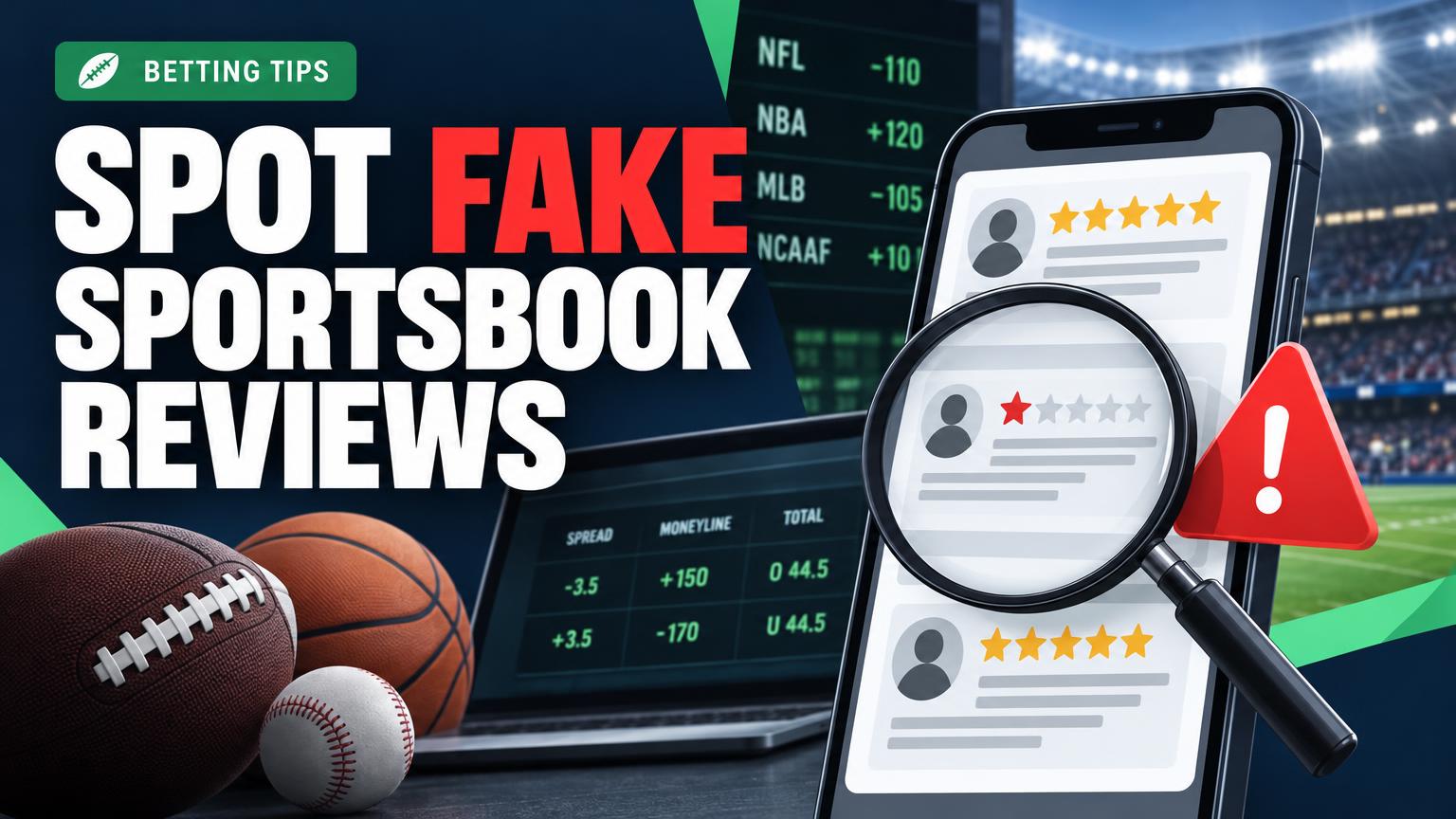
A high rating is only as useful as the reviews behind it.
An offshore sportsbook shows a glowing rating, but most comments say little beyond “great odds” or “easy signup.” None mentions a settled bet, a withdrawal method, or how the book handled a problem. The praise may be genuine; it simply offers little evidence about the experience that matters after placing a bet.
More useful reviews provide specific context: the payment method used, whether bonus rollover terms affected a withdrawal, and what happened when support was contacted. Detail alone does not prove independence, though. Repeated wording, sudden bursts of praise, and ratings displayed beside sign-up links can signal selective or promotional feedback. A score compresses those differences into one number, so the accounts behind it deserve closer attention.
Check who is behind the rating
A rating carries more weight when the site explains who published it and how the score was reached. The About page, article byline, editorial policy, and affiliate disclosure are useful places to look. A named writer is not proof of independence, but an anonymous review with no stated method gives readers little to verify.
Affiliate commissions are common in sportsbook coverage and do not automatically make a review unreliable. The concern is whether compensation is disclosed and kept distinct from editorial judgments. Guidance on how to recognize sponsored sportsbook coverage can help put prominent rankings and repeated recommendations in context.
A documented assessment should say what was checked, when it was checked, and how the score was calculated. For an offshore sportsbook, useful criteria might include payment options, withdrawal terms, betting markets, bonus restrictions, and the availability of customer support. If a site claims to have tested payouts, it should describe the test rather than ask readers to accept the claim on faith.
Treat a customer-rating widget differently from an editorial review. A star average without a review count, dates, moderation policy, or explanation of who can submit ratings may reflect a narrow or unverified sample. It can show reported sentiment, but it cannot establish how the sportsbook performs for most customers.
Review patterns
Scan the review history for patterns
Look beyond the first page
Sort reviews by newest and oldest, then scan several pages. A pattern across months says more than a few conspicuous posts near the top.
Compare the wording
Repeated phrases about fast payouts, generous bonuses, or helpful support may suggest a template—especially when different accounts use the same unusual wording.
Check posting dates
A cluster of glowing reviews posted within hours of one another deserves a closer look. Note whether the site shows similar bursts at other times.
Open reviewer profiles
Profiles with no other posts, identical-looking names, or accounts created on the review date provide little independent context. They are weak evidence on their own, not proof of fake reviews.
Check what happened that week
A promotion can bring in genuine new customers; a service outage can prompt a wave of complaints. Compare the timing with dated announcements or reported problems before drawing a conclusion.
Several signals together justify more skepticism than any single pattern.
Check whether the account can be investigated
A useful review describes a sequence that can be checked against the sportsbook’s published terms. “My withdrawal was denied” leaves out the conditions that might explain what happened. An account that names the approximate date, withdrawal method, verification status, and reason the sportsbook gave offers more to assess—even if the reviewer’s conclusion remains disputed.
The same test applies to praise. A report that a payout arrived is more informative when it identifies the payment method and roughly how long it took. A bonus complaint needs the offer’s eligibility rules, wagering requirement, and any odds restrictions to make sense. For a disputed bet, the sport, market, and settlement rule matter more than an emphatic claim that the result was obvious.
Look for details that allow a comparison, not private account information. Transaction IDs and identity documents need not be public for a complaint to be credible. Dates matter: bonus terms, payment options, and verification procedures can change, so an older experience may not describe the current process.
A tidy timeline is still only one person’s account. Screenshots may show an email or account screen, but they can be cropped, altered, or missing the surrounding exchange. When possible, compare the account with the operator’s terms and any dated follow-up. If the central claim cannot be checked, treat it as a lead rather than a verdict.
Cross-check complaints outside the review site
A low rating can flag a problem, but the next step is to check complaints independently. Search for the operator’s name alongside the specific issue—such as a delayed withdrawal, a voided wager, or an account restriction—rather than relying on the rating site’s summary.
Independent betting forums and complaint records can add useful context. Look at when each report was posted, what evidence is available, whether the sportsbook responded, and how the dispute ended. A dated withdrawal request and a posted reply explaining the applicable term offer more to assess than a one-line accusation. An operator reply is not proof that the operator was right; it shows which explanation can be checked against the published rules.
Top Sportsbook Picks for October 2026
BetUS
200% up to $1,000
Code:
NEW200
18+. Full T&C's apply.
18+. Full T&C's apply. Sports bonus: 100% match up to $500. Casino bonus: 100% match up to $500. Enter promo code NEW200 at deposit and get up to a $1000 bonus. Valid on your first three (3) deposits. Available for all deposit methods. Minimum deposit of $50.
18+. Full terms apply. The Bet Back Bonus is available for new customers on first-time deposits of $50 or more. To redeem, select the offer in the cashier while completing your first deposit. Make your pick(s) in the Sportsbook and then select ‘Opt In to Use Your Bonus’. A Bet Back Bonus pop-up will display, select ‘Claim’ and then enter the risk amount to place your bet. If it wins, you keep your profits. If it loses, get 100% of your risk refunded as Free Play with only 1-time rollover. Free Play can then be used to place bets in the Sportsbook and earn cash. Additional T&Cs apply, please visit MyBookie to access the Help Center or contact Live Chat for more details.
18+. Full T&C's apply. This promotion is available only to new accounts in North America. Freeplay amount must be wagered five times (5x rollover) before it becomes eligible for withdrawal. Only prematch (sportsbook) bets count toward the 5x rollover requirement. Each person may claim only one bonus. If a customer creates multiple accounts to exploit this promotion, bet105 will mark all related accounts as ineligible and reclaim the funds. If a client receives more than two free bets without making a deposit, any winnings from those bets will be forfeited. This promotion applies only to the initial deposit or if specifically assigned by bet105.
18+. Full terms apply. New BUSR members only. Minimum deposit of $50 required per qualifying deposits. Codes 300SB1, 300SB2, and 300SB3 must be entered at the time of each corresponding deposit.
Each code is valid one time only. Each bonus code must be claimed at least 24 hours apart. Only one promo code may be applied per deposit. A 20x rollover requirement applies to the combined total of your initial deposit and bonus before any withdrawal can be made. Redeemable in the Sportsbook only. BUSR management reserves the right to modify, suspend, or cancel this promotion at any time. Redeem each promo code in the cashier to get your bonus. Must be 18 or older. Please gamble responsibly. General House Rules Apply.
18+. Full terms apply. 100% up to $500 Bonus. Valid for non-crypto payment methods only. Minimum deposit amount $50. This offer is not available to customers from Canada or Mexico. The bonus code must be redeemed immediately after the deposit and before a wager has been placed. The sum of the deposit and the bonus are subject to rollover requirements of 12x at min. odds of -200 (1.5) before a new code can be redeemed. Max. $500 of each bet count towards the rollover requirements. Only bets placed on options that take place count towards the rollover requirements. Wagers on Horse Racing and Boosted Odds do not count towards the rollover requirements. All general Everygame Sportsbook rules apply.
21+. Full T&C's apply. Bonus: 35% of qualifying deposit, up to $105. Rollover: 8× (only sports action counts towards the rollover) deposit + bonus. Expiry: 7 days after credit. Hold period: 2 weeks. Payouts allowed only after rollover and hold period are completed. Example: Deposit $200 → Receive $50 Sports Free Play. Sports Free Play Rules: see the BetAnything General Reward Rules for eligible sports, wager types, odds, and rollover rules.
18+. Full T&C's apply. This bonus can only be redeemed on your first deposit. Rollover is 5x Sports/5x Horses/30x Casino on both the initial deposit and the bonus amount. Rollover in our Sportsbook, for winning wagers, will be determined by the lesser of your risk or win amount at the time of wager settlement; for losing wagers your risk amount will be credited to your rollover contribution. Bonus funds cannot be used for play on Live Dealer games. Live Dealer play does not count toward meeting Casino rollover requirements for withdrawal. If a withdrawal is made before the bonus terms are met, all bonus funds as well as any money earned by wagering the bonus will be forfeited.
Raw complaint totals are a weak comparison. One sportsbook may have more customers, more years of operation, or a more visible public complaint channel than another. Without those figures, a higher count does not establish a higher complaint rate. Forum posts can also repeat the same case across several threads.
Give more weight to recurring, documented, unresolved reports involving the same practice, especially when they span different dates and accounts. A single unresolved claim still merits attention, but it should not carry the same weight as a pattern that readers can trace.
Compare the review with current sportsbook rules
A review can describe a real experience and still mislead readers if the sportsbook has changed its terms. Check the operator’s current offer rules, cashier information, withdrawal policy, and verification requirements. Note the review date and the date or version of any terms being compared.
Look for claims that can be checked directly:
Offers: Does the bonus apply to new accounts, and do qualifying deposits, wagering requirements, deadlines, and withdrawal restrictions match the review?
Betting markets: Is the sport or wager type still listed, and is it available to accounts in the relevant location?
Payments and withdrawals: Are the named deposit and payout methods currently supported? Do the stated limits, processing steps, and identity checks match the published rules?
A mismatch is a reason to investigate, not immediate proof of a fake review. An older post may accurately describe a retired promotion or payment method. An archived terms page, dated screenshot, or response from the operator can help establish what applied when the review was written. A recent review that repeatedly contradicts current rules without explaining the difference deserves more skepticism.
Treat licensing and access claims separately. If a review says an offshore sportsbook holds a particular license, check the named regulator’s public register where available. If it says US bettors can sign up, check the operator’s current location restrictions for the specific state. Neither a license listing nor account access, on its own, settles whether an operator is safe or suitable.
Keep a dated record
Save the review date and links to the rules checked. That makes later changes easier to distinguish from an unsupported claim.
Decide how much the rating is worth
A sportsbook rating is more useful when the evidence behind it can be checked. This table is a guide to weighing that evidence, not a formula for calculating a new score.
Evidence
What it adds to confidence
Transparent methodology
Published criteria, testing dates, and affiliate disclosures make specific claims easier to assess. An unexplained score carries less weight.
Credible review history
Accounts with varied activity and dated, concrete experiences offer more context than a burst of near-identical praise.
Corroborated complaints
Similar issues documented across independent sources deserve attention, especially when operator responses can also be checked. Reposts of one allegation are not separate confirmations.
Current terms
Bonus, withdrawal, and eligibility claims that still match the operator’s rules are more useful than claims based on old offers.
When scores conflict, their sources may not be equally independent or current. A recent review that documents its checks may be more informative than several sites repeating the same older assessment; a detailed complaint may likewise reveal a limitation the score misses.
The reasonable conclusion is narrow: how useful is this rating for researching the sportsbook today? Even a well-supported rating cannot settle every question about an offshore operator’s access rules, payment experience, or future dispute handling.
Before acting on a rating, record its source, score, and date, and preserve specific claims about withdrawals, verification, or bonus restrictions. Compare those claims with accounts on independent platforms and the sportsbook’s current terms. A screenshot preserves what a reviewer said; it does not prove the transaction happened as described.
If the account lacks dates or transaction details, independent reports conflict, or the operator’s rules leave a material question unanswered, inconclusive is a reasonable assessment. The unresolved claim is then a subject for further research, not a reason to treat the score as a verdict on the sportsbook.
Top Sportsbook Picks for October 2026
BetUS
200% up to $1,000
Code:
NEW200
18+. Full T&C's apply.
18+. Full T&C's apply. Sports bonus: 100% match up to $500. Casino bonus: 100% match up to $500. Enter promo code NEW200 at deposit and get up to a $1000 bonus. Valid on your first three (3) deposits. Available for all deposit methods. Minimum deposit of $50.
18+. Full terms apply. The Bet Back Bonus is available for new customers on first-time deposits of $50 or more. To redeem, select the offer in the cashier while completing your first deposit. Make your pick(s) in the Sportsbook and then select ‘Opt In to Use Your Bonus’. A Bet Back Bonus pop-up will display, select ‘Claim’ and then enter the risk amount to place your bet. If it wins, you keep your profits. If it loses, get 100% of your risk refunded as Free Play with only 1-time rollover. Free Play can then be used to place bets in the Sportsbook and earn cash. Additional T&Cs apply, please visit MyBookie to access the Help Center or contact Live Chat for more details.
18+. Full T&C's apply. This promotion is available only to new accounts in North America. Freeplay amount must be wagered five times (5x rollover) before it becomes eligible for withdrawal. Only prematch (sportsbook) bets count toward the 5x rollover requirement. Each person may claim only one bonus. If a customer creates multiple accounts to exploit this promotion, bet105 will mark all related accounts as ineligible and reclaim the funds. If a client receives more than two free bets without making a deposit, any winnings from those bets will be forfeited. This promotion applies only to the initial deposit or if specifically assigned by bet105.
18+. Full terms apply. New BUSR members only. Minimum deposit of $50 required per qualifying deposits. Codes 300SB1, 300SB2, and 300SB3 must be entered at the time of each corresponding deposit.
Each code is valid one time only. Each bonus code must be claimed at least 24 hours apart. Only one promo code may be applied per deposit. A 20x rollover requirement applies to the combined total of your initial deposit and bonus before any withdrawal can be made. Redeemable in the Sportsbook only. BUSR management reserves the right to modify, suspend, or cancel this promotion at any time. Redeem each promo code in the cashier to get your bonus. Must be 18 or older. Please gamble responsibly. General House Rules Apply.
18+. Full terms apply. 100% up to $500 Bonus. Valid for non-crypto payment methods only. Minimum deposit amount $50. This offer is not available to customers from Canada or Mexico. The bonus code must be redeemed immediately after the deposit and before a wager has been placed. The sum of the deposit and the bonus are subject to rollover requirements of 12x at min. odds of -200 (1.5) before a new code can be redeemed. Max. $500 of each bet count towards the rollover requirements. Only bets placed on options that take place count towards the rollover requirements. Wagers on Horse Racing and Boosted Odds do not count towards the rollover requirements. All general Everygame Sportsbook rules apply.
21+. Full T&C's apply. Bonus: 35% of qualifying deposit, up to $105. Rollover: 8× (only sports action counts towards the rollover) deposit + bonus. Expiry: 7 days after credit. Hold period: 2 weeks. Payouts allowed only after rollover and hold period are completed. Example: Deposit $200 → Receive $50 Sports Free Play. Sports Free Play Rules: see the BetAnything General Reward Rules for eligible sports, wager types, odds, and rollover rules.
18+. Full T&C's apply. This bonus can only be redeemed on your first deposit. Rollover is 5x Sports/5x Horses/30x Casino on both the initial deposit and the bonus amount. Rollover in our Sportsbook, for winning wagers, will be determined by the lesser of your risk or win amount at the time of wager settlement; for losing wagers your risk amount will be credited to your rollover contribution. Bonus funds cannot be used for play on Live Dealer games. Live Dealer play does not count toward meeting Casino rollover requirements for withdrawal. If a withdrawal is made before the bonus terms are met, all bonus funds as well as any money earned by wagering the bonus will be forfeited.